Showing posts with label School. Show all posts

Thursday, April 7, 2011

Real student-centered learning.

As teachers and future teachers we often think of ourselves as "professionals" who are owed some position of authority in a school system. We line ourselves up in rows in college classes to be imputed with information, skill sets, and best practices to convey content to the next generation. And at the alleged end of this school process, we end up working in a system that we love and hate.

We love working with children or young adults and inviting them to explore new things. We hate some of the ways that the bureaucracy makes us do. We love connecting with students who are, after all, people with imaginations and stories and desires and purposes of their own. We hate that we have to compartmentalize them and examine them with some dehumanizing psychometric tools. Well, some of us do.

And we wonder, "Who is this education for?" There's a lot of talk about student-centered teaching and schooling. But it looks like an awful lot of that is so much talk and not so much action. The curriculum doesn't budge. The goals are still the same. Teachers want to center their practice on students but are tied into a command and control system that regulates them and their students so much that they are a molding device for an industrial factory school for someone else: the federal or state government, businesses, corporations, or some other entity. Too often anything and anyone but the child themselves.

So what happens when students really do it themselves with the guidance of adults? Do you ever wonder how people can be students without the stricture of school?

Here seems to be one answer.

North Star Slice No. 1 from North Star on Vimeo.


What do you think?

Monday, March 7, 2011

Five Schools Implementing Community Garden Projects

This is a guest post by Katheryn Rivas, a freelance writer and blogger.


---


As the threat of climate change continues to sink in to our collective psyches, this generation has had to slowly un-learn everything we became accustomed to in an effort to reduce our carbon footprint. The climate-conscious have done away with gas-guzzling SUVs in favor of hybrid or electric vehicles, switched out their light bulbs, learned to recycle, and learned to shop locally.

With a little help, the next generation of young people won't have as much un-learning to do. Parents, teachers, administrators and the greater community who want to instill principles of sustainability into the next generation can start with the children under their care. One way of doing so is by implementing community gardens in neighborhood schools. Here we'll discuss five schools that are implementing community garden projects to teach children about nature, the environment and what it means to grow one's own food.


1.) Mount Kisco Elementary School.

This public K-5 school in Mount Kisco, NY, is planting its first community garden this spring with the generous financial backing of a community partner, the Bedford Garden Club. Not only will members of the garden club act as master gardeners to the children who will learn from the project, but the community as a whole will be able to grow food there too. Children will learn how to garden, compost and irrigate using rain barrels. The garden, which will grow tomatoes, lima beans, snap peas, radishes, sunflowers and herbs, may be used in the future to launch an after-school cooking program. Read more about this community garden in Chappaqua-Mount Kisco Patch.


2.) Martin Luther King, Jr. Middle School.

This urban public school in Berkeley, Calif., benefits from a program several years in the making called the Edible Schoolyard, a one-acre organic garden where they learn how to grow, harvest and prepare produce. The community partner here is a nonprofit called the Chez Panisse Foundation. The garden includes berries, herbs, fruits, veggies and flowers. There's even an adjacent kitchen classroom where students learn to cook using the produce they harvest. Most recently the project has taught children about sustainability through a Rainwater Catchment System. Read more about this education garden at the Edible Schoolyard Website.


3.) Waupaca Community/School Garden.

This community garden is situated on property owned by the School District of Waupaca in east central Wisconsin and is truly a collaboration among local businesses, nonprofits, a local school district and individuals. Not only is the garden used as an outdoor classroom and educational tool for area schools, but the community uses it to supplement the Waupaca Food Pantry with fresh produce. The community garden grows herbs, fruits and veggies like basil, squash, zucchini, cantaloupe and sweet corn. Read more about this community garden on the school district's website.


4.) The Wheeler School.

This independent day school in Providence, RI, has an organic garden where students learn to grow food and that also contributes food to the RI Community Food Bank. The garden not only provides a chance for children to get their hands dirty learning to plant and harvest food, but it also produced more than 200 pounds of organically-grown produce for the food bank in 2010. Learn more about the Wheeler School's garden through its blog.


5.) Carmel Middle School.

This school in Carmel, Calif., teaches kids about sustainability alongside the basics of gardening using a program called MEarth and an organic garden situated on the nearby Hilton Bialek Habitat. Kids learn about native plants, habitat restoration, climate change, cooking and nutrition, and waste and recycling through this program. The program also invites the wider community in through open volunteer days. Learn more about how the garden helps in the education process at Center for Ecoliteracy and the Carmel Habitat.

By-line:

This guest post is contributed by Katheryn Rivas, who writes on the topics of online universities which discusses about education, students life, college life, career and eco living. She welcomes your comments at her email Id: katherynrivas87@gmail.com.

Sunday, January 2, 2011

Teach children to be good stewards

I (Peter Buckland) was recently invited to write an opinion piece for the Centre Daily Times on my vision of education. It is a broad appeal for democratic place-based education. I wrote:
There are three ways to retool school and society for a sustainable future: First, most schools are not democratic. Children generally do not have meaningful influence on school policies. But the sustainable future will require people to fully participate in civic life, to make the decisions that affect their lives. Given opportunities to help govern their schools with caring adults working with them, children will have an opportunity to learn the skills of self-governance by self-governing: informing themselves of issues and perspectives, persuading others to adopt new points of view, negotiating compromises and implementing solutions.

Second, most schools reflect the biases of the larger economic system, minimizing the crucial historic and current roles of indigenous people, nonwhite immigrants and women. We need to honor and focus on those roles and live into their cultural practices and beliefs. By grounding ourselves in part in movements for justice and how they changed society in the past, the sustainability movement can build on those successes.

Third, schools should better connect children with the places where they live. Here in central Pennsylvania, our children can learn the histories of Penns Valley, Bellefonte and surrounding towns. They can learn how the stream water in Galbraith Gap Run flows from Bear Meadows to meet Spring Creek. They can come to know the subtle changes in tree stands in Cooper’s Gap,learn to recognize by sight and sound the myriad birds that cohabitate with us and understand the cyclical seasons of the wild and domesticated plants and animals we live among.
Read the entire piece at this link.

Thursday, August 26, 2010

The greenhouse is finished

Hey biophiles! Look! It's finished! Becky M went with her husband and attached the roof. It looks beautiful! I think we owe Becky and her family a lot of praise and thanks.


Tuesday, June 8, 2010

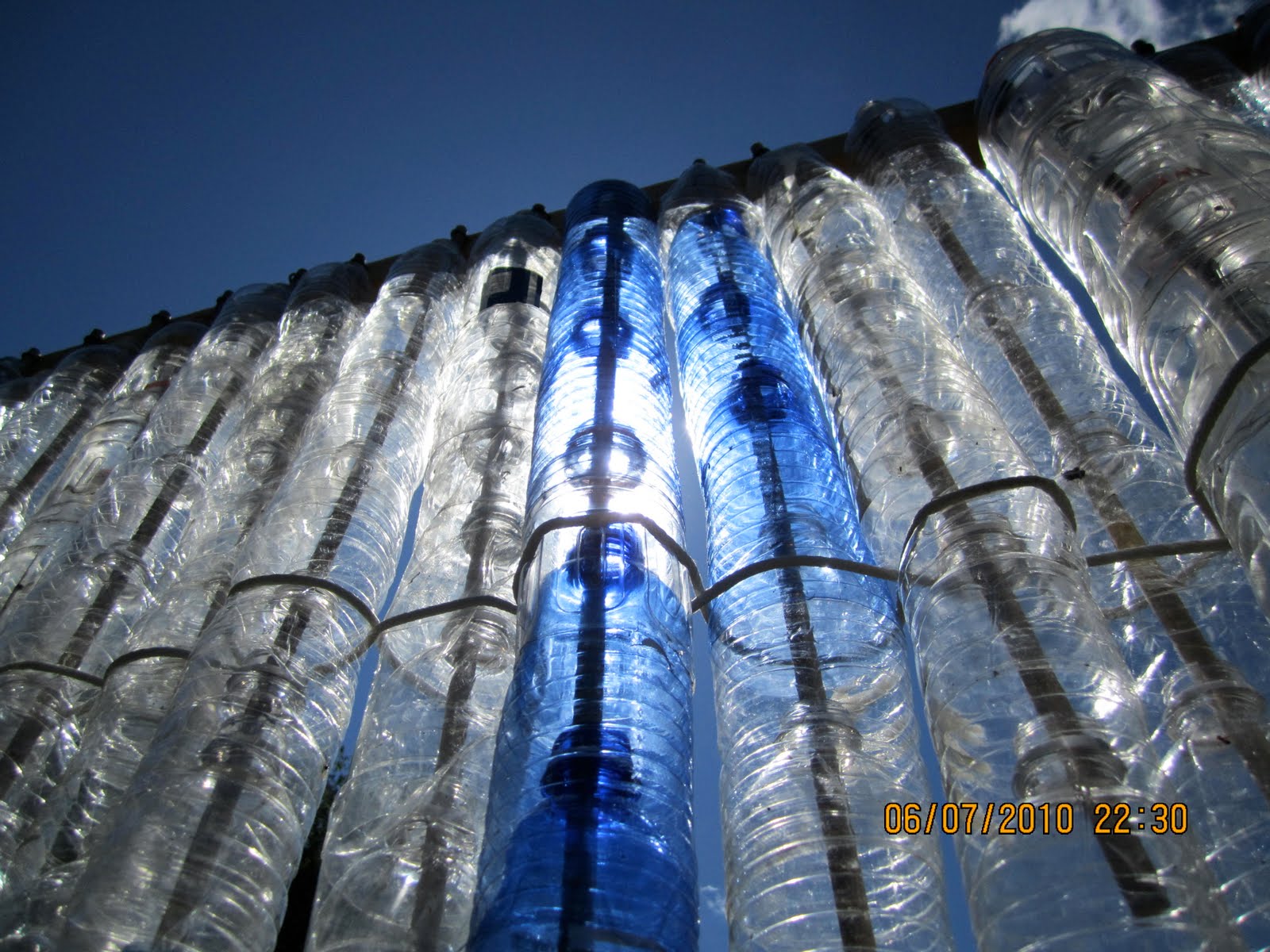
Plastic bottle greenhouse update - Two walls up! Door on next wall that's nearly ready for mounting!

In the continuing saga of the Corl Street Elementary School plastic bottle greenhouse...we have some more progress. Over Memorial Day weekend, Becky and her husband Vilmos finished a wall that I got to put up yesterday and tie the bottles together for support.


Today, another wall frame was finished and the door put on with Zach (in the picture with the door).


So this thing is coming along. For me, the coolest thing has been talking to people about why I came up with this hair-brained idea and why we started doing it. We live with these bottles and really wish we could get rid of them. Barring that at this point, maybe we can exapt them for an educational, social, and ecological good. Why not use them to try to help grow food and increase awareness about the waste cycle and show how to reduce-reuse-recycle. Every teacher and parent that has talked to Becky or me about this is really into it. All of them want to make something that is both "cool" and instructive for sustainability.

In a few more installments of work, we'll have all the walls up and then we'll get to work on the roof. Enjoy the pictures.